


 RSMUS.com
For years, CIOs have been asked a deceptively simple question: “Is our IT spending optimized?”
In practice, it’s one of the hardest questions to answer with confidence.
Traditional IT financial management tools and spreadsheets were never designed for the level of complexity modern CIOs face. Spend is often viewed in flat, static categories—labor, software, hardware—without enough context to understand why money is being spent, what outcomes it supports or how it shifts under different business scenarios.
As a result, many organizations struggle with:
- Shallow benchmarking that lacks strategic context
- Limited visibility into cost drivers across services and portfolios
- Forecasts that break the moment assumptions change
A new generation of FP&A platforms is changing this, unlocking radical cost transparency and giving CIOs the dimensional insight they need to run IT like a portfolio, not a cost center.
The Core Problem: IT Spend Lacks Dimensionality
Most IT budgets today are still managed in two dimensions:
- Cost category (people, software, outsourcing)
- Cost center (IT, Security, Infrastructure)
What’s missing is business-relevant context.
Modern CIOs need to understand spend across multiple, intersecting dimensions, such as:
- Strategic intent: Run the Business vs. Grow vs. Transform
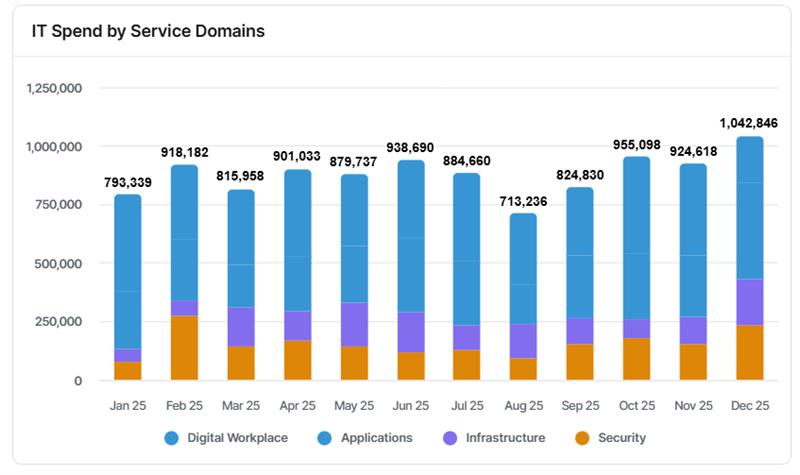
- Service domains: Applications, Security, Infrastructure, Modern Workplace
- Delivery model: In-house, outsourced, SaaS, managed services
- Value drivers: Risk reduction, productivity, growth enablement, innovation
Without this dimensionality, benchmarking becomes misleading and optimization decisions turn reactive, focused on cutting costs rather than reallocating investment to higher-value outcomes.
How Modern FP&A Platforms Change the Game
Platforms like Abacum represent a shift away from static budgeting toward multi-dimensional, driver-based financial planning.

Abacum is an AI‑native FP&A platform designed to support granular modeling, forecasting and scenario analysis across multiple dimensions and business drivers. It allows finance and IT leaders to build flexible models that incorporate headcount, operational spend and strategic initiatives while continuously testing assumptions through scenario planning.
From a CIO perspective, this enables several critical capabilities:
1. True Portfolio-Level IT Transparency
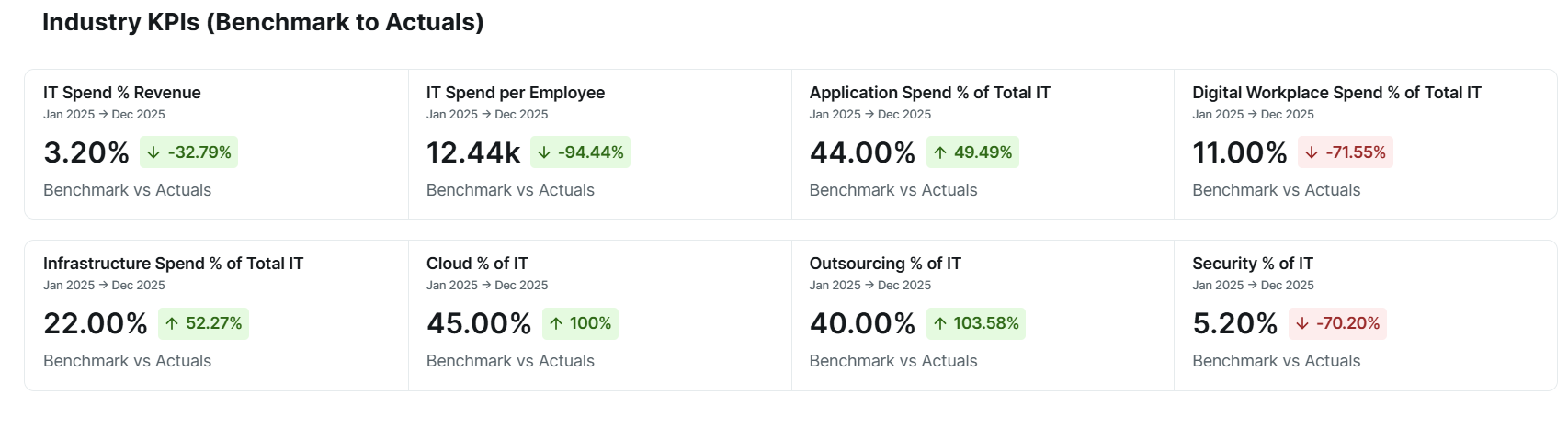
Instead of asking “How much are we spending on IT?”, leaders can ask:
- How much are we spending to run, grow, or transform the business
- What percentage of spend is tied to security vs. applications vs. workplace?
- Where are we over‑invested relative to peers—and where are we under‑investing?
Because Abacum supports multi-dimensional modeling and granular forecasts, IT spend can be analyzed in ways that align directly to strategic intent, not just accounting structure.
2. Scenario Planning for an Uncertain World
CIOs today are under constant pressure to forecast the impact of:
- Headcount changes
- Outsourcing or insourcing decisions
- AI investments
- Major capital initiatives
Abacum enables teams to model and compare multiple scenarios—often framed as base, bear and bull cases—by adjusting underlying assumptions and drivers rather than rebuilding spreadsheets from scratch.
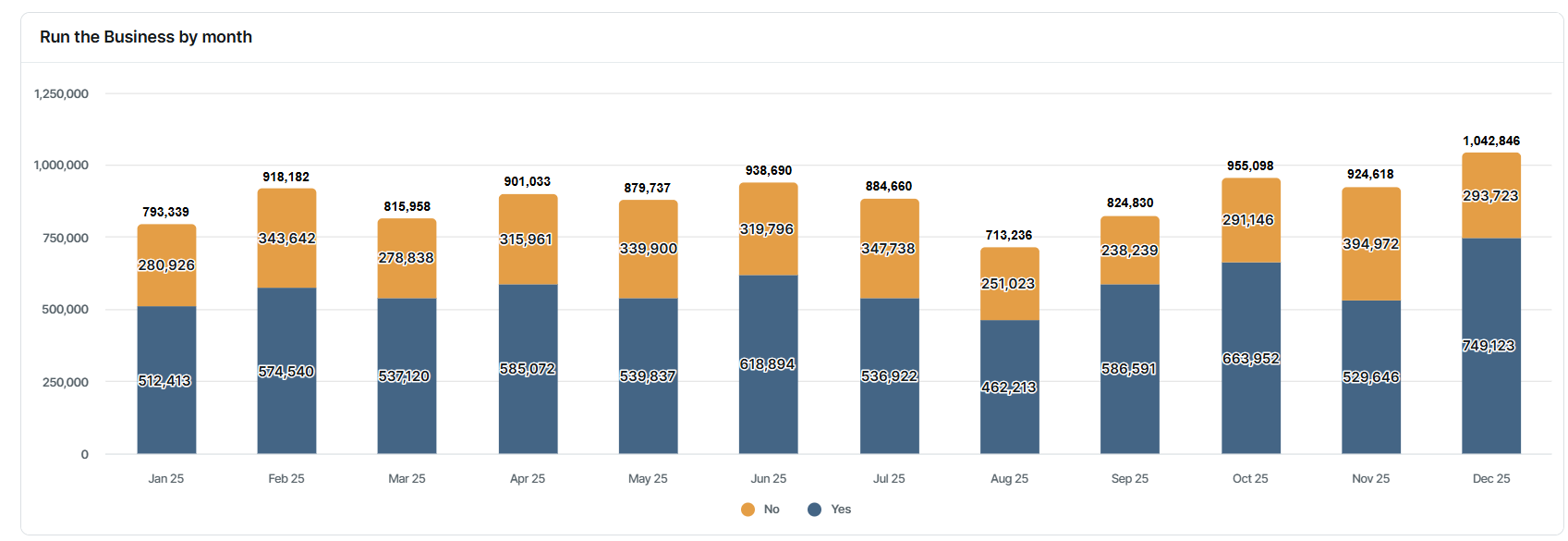
This makes it possible to answer questions like:
- What happens to IT run costs if we reduce internal headcount by 10%?
- How does increased SaaS adoption change our cost structure over three years?
- Where do AI investments create leverage—or simply add expense?
Instead of reactive budgeting cycles, CIOs gain a living financial model that evolves with the business.
From Visibility to Optimization: Pairing FP&A with Procurement Intelligence
Radical transparency is only valuable if it leads to action. This is where pairing FP&A platforms with third‑party procurement and spend optimization tools becomes powerful.
Platforms like Vertice focus specifically on SaaS and cloud procurement, offering pricing intelligence, vendor benchmarking and expert‑led negotiations across thousands of software providers.

Vertice provides:
- A consolidated view of SaaS contracts, renewals and utilization
- Benchmarking against market pricing across a large vendor dataset
- Expert support to negotiate better commercial terms and reduce waste
When combined with an FP&A platform:
- Abacum tells you where and why you’re overspending
- Vertice helps you fix it by driving better commercial outcomes
Together, they close the loop between insight and execution.
Why This Matters Now for CIOs
In an environment defined by margin pressure, AI disruption and heightened board scrutiny, CIOs are expected to:
- Defend IT spend with precision
- Forecast with confidence
- Prove that investments are optimized—not just controlled
Flat budgets and spreadsheet-driven planning can’t keep up with this reality.
Modern FP&A platforms like Abacum, combined with procurement intelligence tools like Vertice, give CIOs the ability to:
- Benchmark IT spend with strategic context
- Model uncertainty instead of reacting to it
- Reallocate dollars toward higher-value outcomes
For CIOs serious about transparency, optimization and credibility at the executive table, this is quickly becoming table stakes, not a nice-to-have.

Diego Rosenfeld
Diego leads RSM's technology advisory practice, focused on helping organizations build actionable IT roadmaps and navigate business transformation. Working across a broad range of industries, he brings both strategic perspective and hands-on experience to each engagement, frequently serving clients as a fractional or interim CIO. Much of Diego's current client work centers on generative AI. He has developed a considered point of view on the subject: the organizations best positioned to benefit are those that approach adoption responsibly, thoughtfully sequencing initiatives across productivity improvement and process automation rather than pursuing speed at the expense of sound judgment. He works closely with leadership teams to develop AI strategies that are practical, governed, and built to last. Diego is a strong proponent of OKR driven IT execution, applying structured objective-setting to align technology initiatives with broader business priorities. He pairs this with a focus on IT financial transparency, helping clients identify cost optimization opportunities and determine whether their technology investments are delivering measurable value. Diego enjoys writing about emerging technology and is a regular speaker at webinars and live events, connecting the dots between strategy and real-world application. Outside of work, Diego is an avid tennis and padel player, and competes on the American Backgammon Tour.