


 RSMUS.com
The automotive aftermarket operates in a fast-paced, constantly evolving environment. Demand fluctuations, changing vehicle lifecycles, and supply chain disruptions make accurate forecasting both critical and challenging. Businesses need real-time insights, intelligent forecasting, and agile decision-making to keep up with customer demand while maintaining optimal inventory levels.
At RSM, we help organizations implement Microsoft Dynamics 365 solutions that use AI to support smarter decision-making. One of the most impactful innovations within Dynamics 365 Supply Chain Management is the Demand Planning app, introduced in 2024. This tool provides powerful forecasting capabilities designed to improve both accuracy and agility.
When integrated with Copilot, Microsoft’s AI-powered assistant, the Demand Planning app allows businesses to easily analyze demand trends and interact directly with forecast data. As Microsoft continues expanding its AI capabilities, Demand Planning is becoming even more intelligent—delivering predictive insights, automated recommendations, and greater visibility into supply chain fluctuations.
These capabilities make the solution especially valuable for the automotive aftermarket. In an industry defined by unpredictable demand, evolving vehicle lifecycles, and supply chain disruptions, companies need a dynamic, data-driven approach to inventory management.
In the following sections, we explore common demand planning challenges in the automotive aftermarket and how the advanced features of Microsoft’s Demand Planning app can help solve them.
Demand Planning Challenges in the Automotive Aftermarket
Several complex factors influence demand in the automotive aftermarket:
Changing vehicle aging trends
As vehicle lifespans increase, demand for replacement parts fluctuates and becomes harder to predict.
Seasonal demand patterns
Components such as batteries, tires, and windshield wipers experience predictable—but intense—seasonal demand spikes.
OEM model releases and part compatibility
New vehicle models influence the availability and demand for compatible aftermarket parts.
Supply chain disruptions
Unexpected delays can create stockouts or excess inventory, resulting in revenue loss and operational inefficiencies.
Traditional demand planning methods often rely on manual spreadsheets and static forecasting models. These approaches make it difficult to adapt quickly to market changes.
With Copilot-powered Demand Planning in Dynamics 365 Supply Chain Management, businesses can transform raw data into real-time insights and act on them immediately.

Figure 1: Demand Planning with Copilot enables planners to easily interact with historical demand and forecast data.
How Demand Planning with Copilot Improves Forecasting
AI-Driven Forecasting for Greater Accuracy
Copilot improves forecast accuracy through automatic AI parameter tuning and the use of external signals. Businesses can incorporate real-world factors such as seasonality, promotions, and historical demand patterns.
This approach allows planners to anticipate demand fluctuations and prevent costly inventory imbalances.
Instant Demand Insights with Natural Language AI
Instead of manually analyzing spreadsheets, planners can simply ask Copilot questions such as:
-
“What were the biggest demand shifts between April and May?”
-
“How does demand in Q1 this year compare to Q1 last year?”
-
“What are the biggest outliers in this year’s sales data?”
Copilot analyzes the data instantly and delivers insights in real time. This allows planners to identify patterns, detect anomalies, and make faster data-driven decisions.
What-If Scenario Planning for Disruption Readiness
Copilot enables interactive what-if analysis, allowing businesses to simulate potential demand scenarios and adjust forecasts dynamically.
This capability is particularly valuable in the automotive aftermarket, where demand can change quickly due to supply chain delays, recalls, or economic fluctuations.
Automated Trend and Outlier Detection
The Demand Planning app helps planners identify trends and anomalies across multiple time horizons. Whether reviewing a six-month trend or detecting unexpected demand spikes, teams gain valuable visibility without relying on manual analysis.
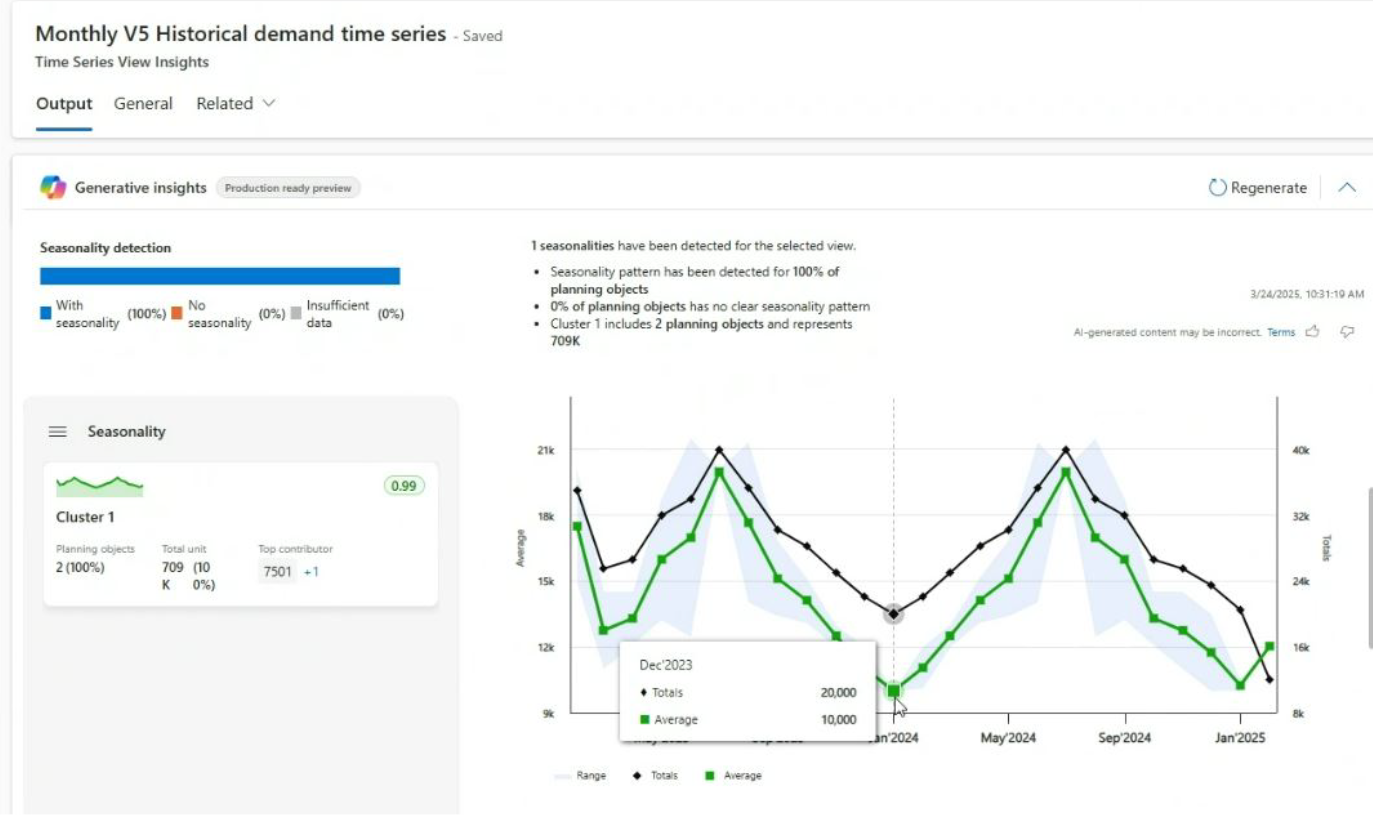
Figure 2: Copilot automatically detects trends such as seasonality and provides actionable insights to improve forecasting accuracy.
Seamless Collaboration Across Teams
Effective demand planning requires coordination between procurement, sales, and supply chain teams.
The Demand Planning app supports in-product commenting and integrates directly with Microsoft Teams, enabling stakeholders to collaborate efficiently and adjust forecasts in real time.
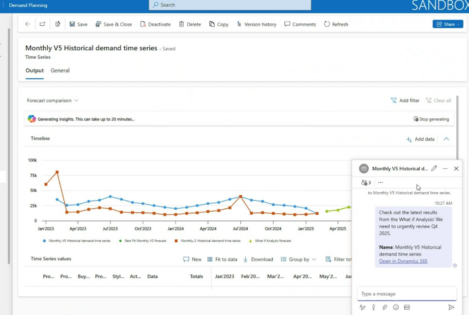
Figure 3: Embedded Microsoft Teams allows users to comment directly within the Demand Planning app, improving collaboration across teams.
End-to-End Integration with Supply Chain Execution
Because the Demand Planning app is natively integrated with Dynamics 365 Supply Chain Management, forecasts connect directly to execution processes.
Forecasted demand automatically informs:
-
procurement planning
-
production scheduling
-
inventory optimization
This integration enables organizations to respond quickly and efficiently to changes in demand.
Why RSM
As a trusted Microsoft consulting partner, RSM helps automotive aftermarket organizations maximize the value of Dynamics 365 Supply Chain Management, Demand Planning, and Copilot.
Our industry expertise helps businesses implement best practices and use the latest technology to improve forecasting accuracy and operational efficiency.
With RSM’s guidance, organizations can:
-
Reduce excess inventory and stockouts
-
Make faster, data-driven decisions
-
Improve demand forecast accuracy using AI insights
-
Strengthen supply chain agility through scenario planning
Want to see how Copilot can transform your demand planning strategy? Contact RSM to learn how we can help your business leverage Microsoft Dynamics 365 for supply chain success.

Aaron Penick
Aaron Penick is a Senior Associate in RSM’s Business Applications practice, specializing in Microsoft Dynamics 365 Finance and Operations and the Power Platform. With a strong technical background and a problem-solving mindset, he helps clients navigate complex digital transformations by delivering scalable, innovative solutions. Aaron works closely with organizations across industries, leveraging his expertise in ERP systems and business process optimization to enhance operational efficiency. Dedicated to maximizing the value of technology investments, he focuses on driving long-term success for his clients through tailored, high-impact solutions.