

 RSMUS.com
Quality Engineering has evolved from manual defect detection to automated testing, continuous validation and risk-based quality management.
Now, another shift is emerging: Autonomous Quality Engineering, or AQE.
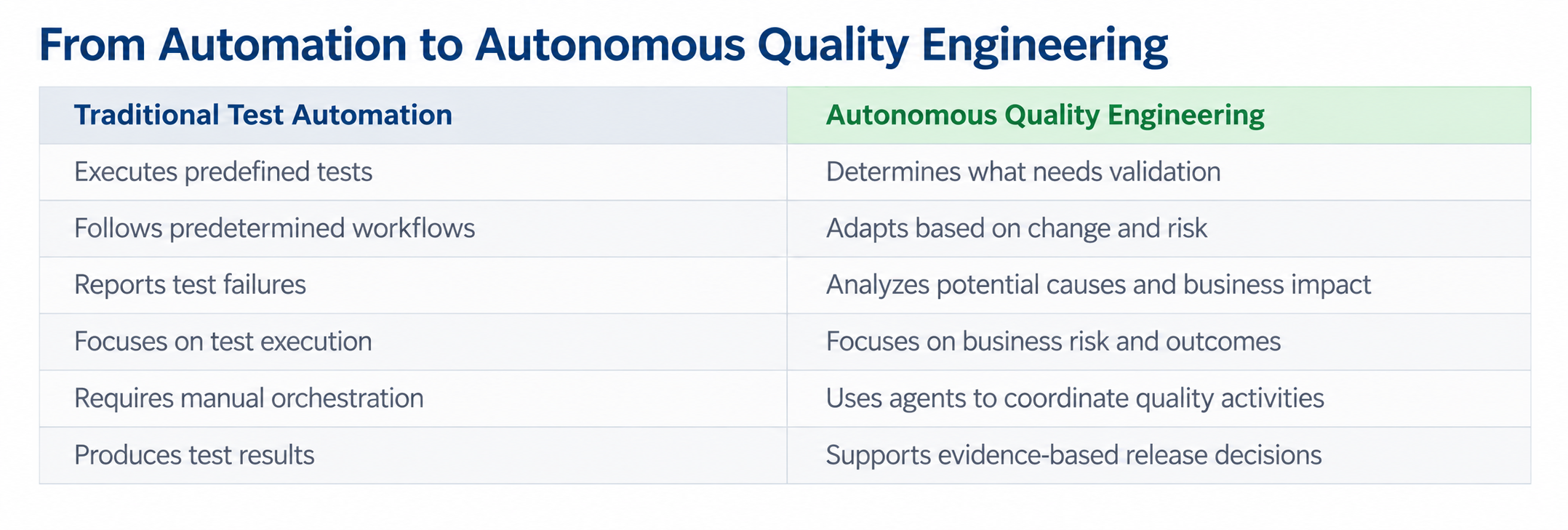
Traditional automation executes predefined tests. AQE goes further by using AI agents, enterprise context, quality data and feedback loops to help determine:
- What changed?
- Which business processes are exposed?
- What should be validated?
- Why did a failure occur?
- What action should happen next?
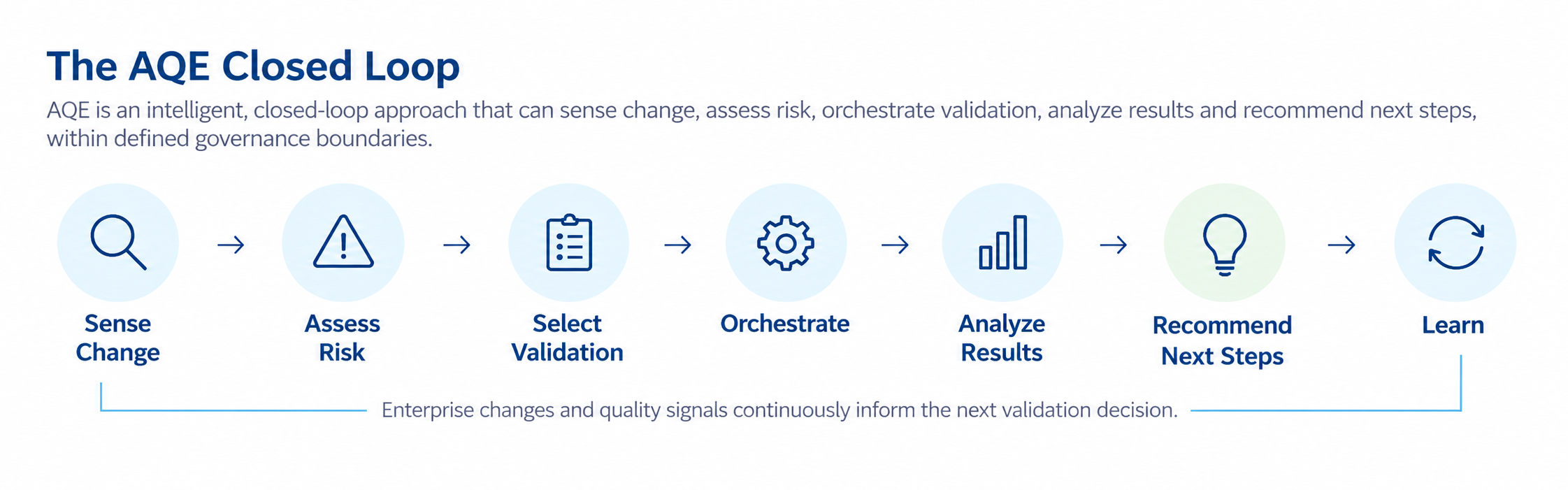
AQE is not simply faster test automation. It is an intelligent, closed-loop approach that can sense change, assess risk, orchestrate validation, analyze results and recommend next steps, within defined governance boundaries.
Supply chain process assurance
A change to inventory allocation may affect order management, warehouse operations, transportation and financial posting across several systems.
AQE could map the impacted Order-to-Cash flow, select high-risk scenarios based on dependencies and prior incidents, coordinate validation across applications and identify where outcomes differ from expected business rules.
This allows teams to investigate process risk before the change reaches production and affects fulfillment.
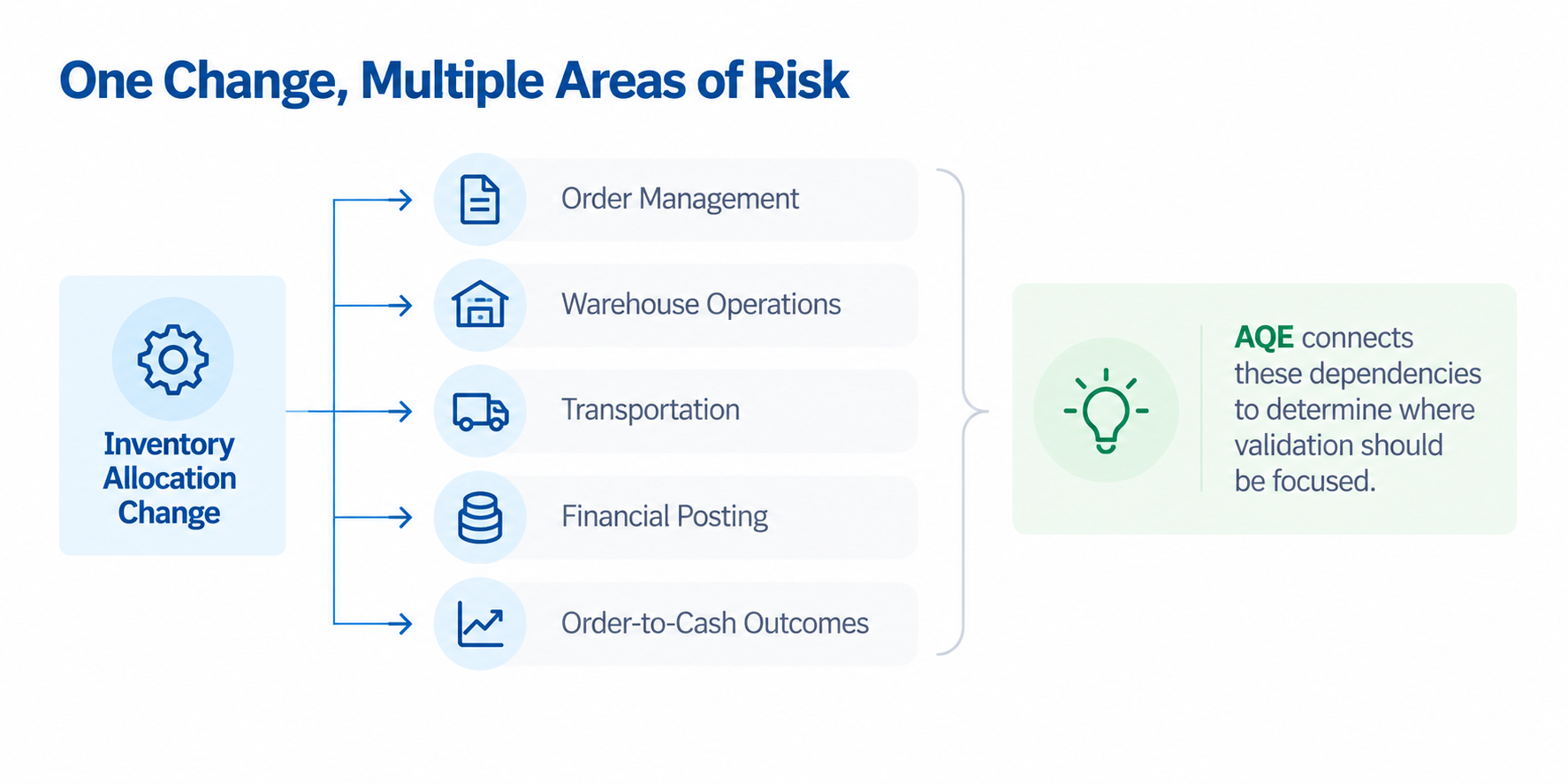 AQE connects these dependencies to determine where validation should be focused.
AI-enabled business processes
As copilots and intelligent agents become embedded in enterprise workflows, organizations must validate more than deterministic transactions.
For example, an agent supporting procurement might recommend suppliers, generate purchase requests or route exceptions. AQE could evaluate whether recommendations use appropriate data, follow established business rules, preserve approval controls and produce consistent outcomes.
This introduces two connected priorities:
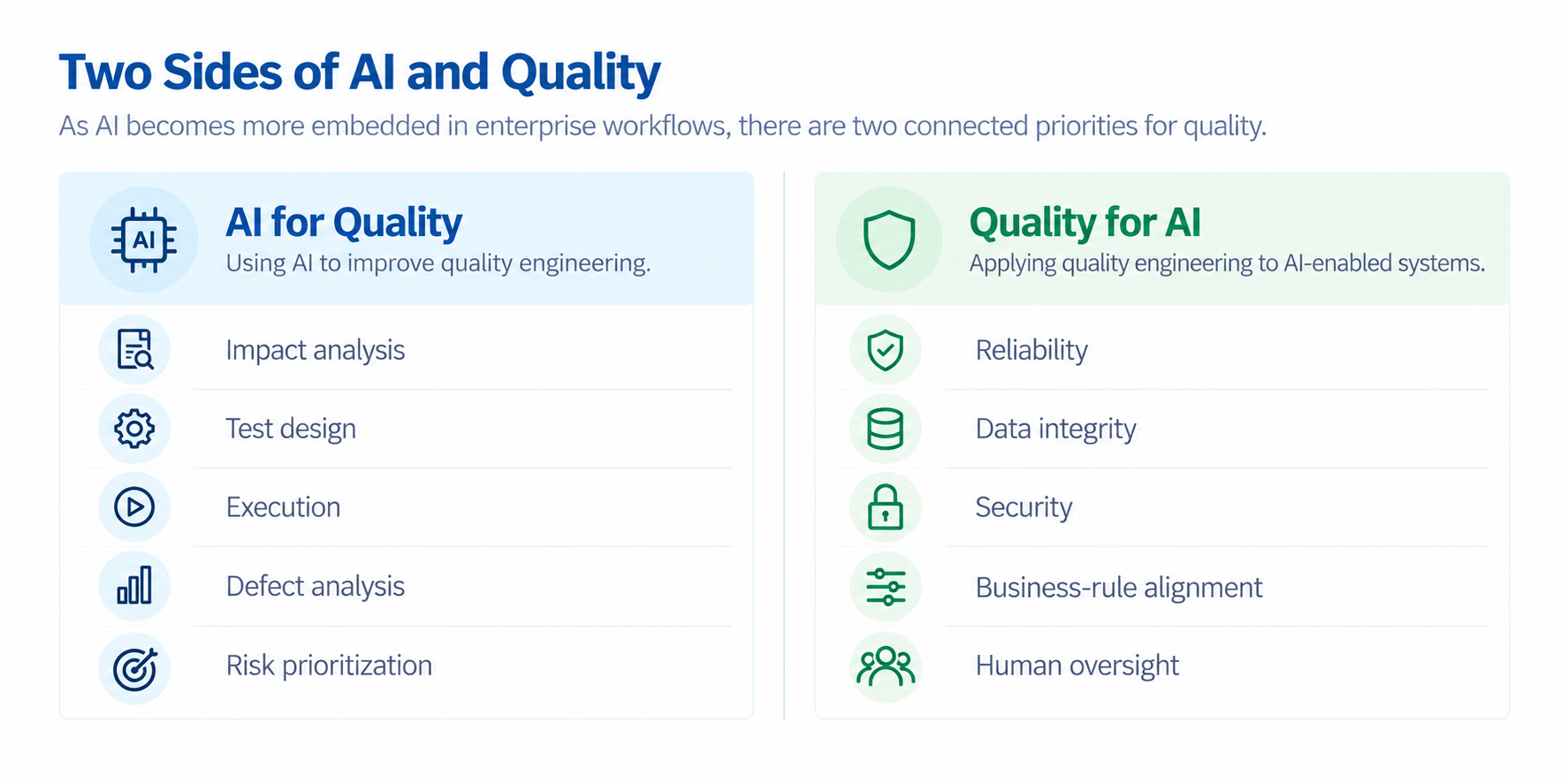
AI for Quality improves how quality work is performed.
Quality for AI helps ensure AI-enabled applications and agents behave appropriately.
From scripts to adaptive assurance
Traditional automation asks:
Which test scripts should we run?
Autonomous Quality Engineering asks:
What changed, which business outcomes could be affected and what evidence is required to make a responsible release decision?
That distinction matters as enterprise environments become more interconnected, cloud-based and AI-enabled.
AQE can connect signals from requirements, code and configuration changes, test results, historical defects, service incidents and production telemetry.

Autonomy does not remove accountability
Autonomous Quality Engineering should not mean ungoverned AI or fully automated deployment decisions.
Human oversight remains critical for defining acceptable risk, validating high-impact recommendations, governing AI-generated assets and approving deployment readiness.
The practical path is progressive autonomy:
 The next evolution of quality
 The next evolution of quality
AQE will not be defined by how many test cases an AI agent generates. Its value will come from directing validation toward the risks that matter most, adapting to enterprise change and giving leaders stronger evidence for release decisions.
It will also elevate the quality professional’s role from coordinating test execution to governing intelligent quality ecosystems and advising leaders on technology and business risk.

The future of QE is not merely automated execution. It is adaptive, governed and increasingly autonomous assurance of business outcomes.
Ready to advance your quality engineering strategy?
As enterprise environments become more complex and AI-enabled, organizations need a quality approach that can evolve with them. RSM can help organizations assess their current quality engineering capabilities, identify opportunities for AI-enabled and autonomous assurance, and build a practical roadmap toward more adaptive, risk-based quality.
Learn how RSM Quality Engineering can help your organization build greater confidence in enterprise technology and business outcomes.
a

Jassi Kohli
I am an Enterprise Transformation and Quality Engineering leader with 25+ years of experience helping organizations modernize operations, accelerate digital transformation, and maximize business value from technology investments. Throughout my career, I have led large-scale global initiatives spanning SAP, Oracle, Salesforce, Microsoft Dynamics 365, cloud modernization, application consolidation, M&A integration, and AI-enabled business transformation. My expertise combines strategic program leadership, operational excellence, and Quality Engineering to help organizations deliver complex change with confidence. As the leader of RSM's Quality Engineering practice, I help clients embed quality across the transformation lifecycle through intelligent automation, AI-powered testing, business process validation, and end-to-end assurance. My focus is on reducing implementation risk, accelerating value realization, and driving successful business outcomes.