


 RSMUS.com
Quality Is No Longer About Testing. It’s About Transformation Confidence.
Technology leaders have never faced more pressure to deliver change.
ERP modernizations, cloud migrations, AI initiatives, cybersecurity enhancements, regulatory requirements, and continuous releases are all competing for executive attention. At the same time, business leaders expect technology investments to accelerate growth, improve customer experiences, and drive operational efficiency.
Yet despite billions invested in transformation programs each year, many organizations still struggle with failed deployments, business disruption, performance issues, and user adoption challenges.
The root cause is often not the technology itself.
It’s a lack of confidence that systems, integrations, data, and business processes will operate as intended once change is introduced.
This is where Quality Engineering (QE) becomes critical.
For today’s CIO, Quality Engineering is no longer a testing activity performed before go-live. It is a strategic discipline that enables organizations to innovate faster, reduce technology risk, and achieve transformation outcomes with greater certainty.
The Shift from Testing to Quality Engineering
Modern organizations require a much broader perspective.
Testing focuses on defect detection.
Quality Engineering focuses on risk prevention, resilience, and business outcome assurance.
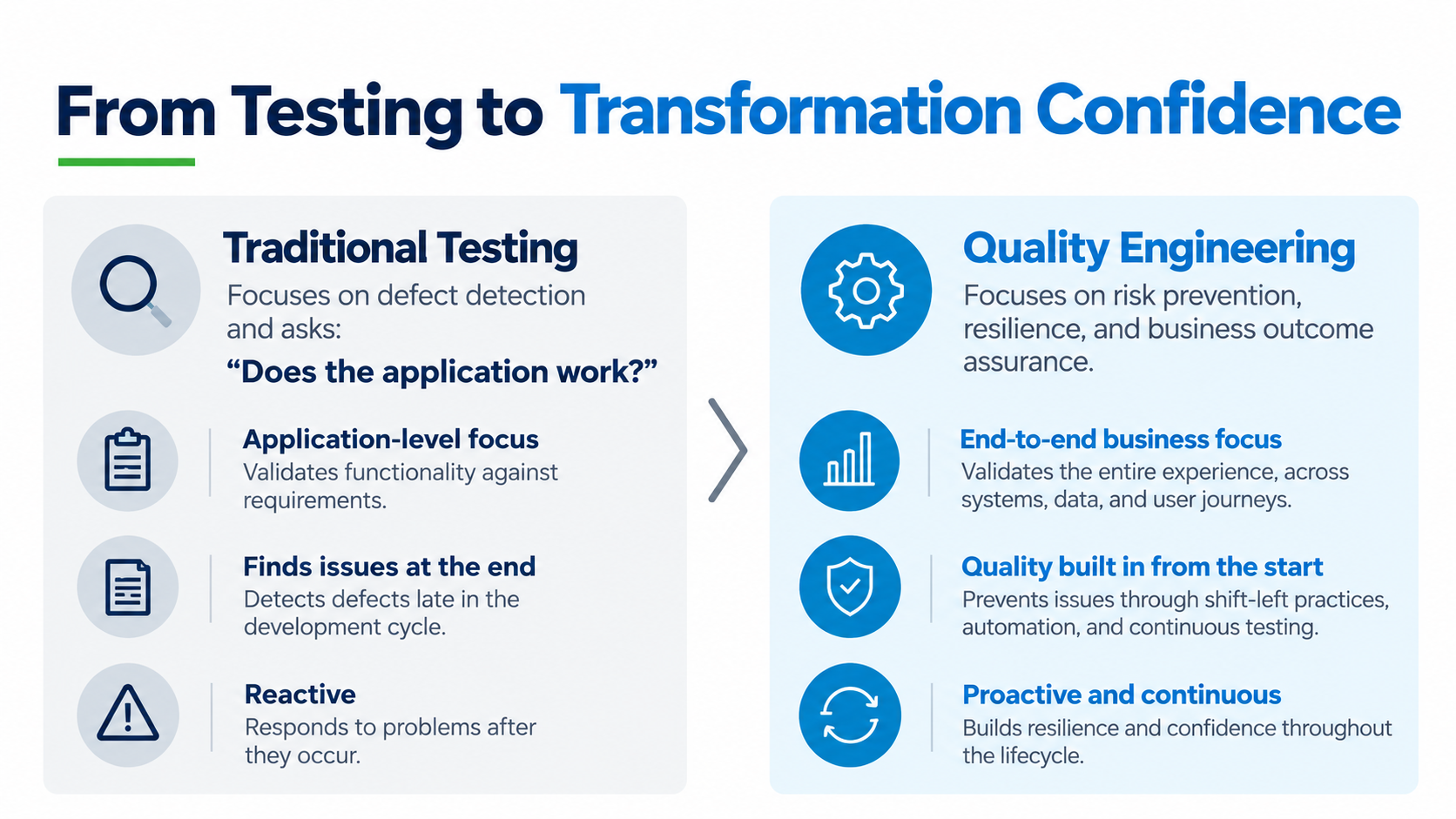
The goal is not merely to launch technology successfully. The goal is to ensure technology consistently delivers business value throughout its lifecycle.
Business Process Failures Matter More Than System Failures
Many organizations continue to evaluate quality one application at a time.
Unfortunately, business operations do not function that way.
A customer order may begin in CRM, flow through ERP, trigger inventory updates, integrate with logistics providers, and ultimately impact financial reporting, customer service, and compliance processes.

For CIOs, this is one of the most important realities of modern technology management.
Quality failures increasingly occur at the intersection of systems, data flows, integrations, and business processes.
Organizations that focus solely on functional testing often gain a false sense of readiness. Those that adopt end-to-end Quality Engineering practices gain visibility into operational risks before they become production issues.
ERP Modernization Doesn’t End at Go-Live
Go-live is often viewed as the finish line of a transformation program.
In reality, it is the beginning.
Cloud platforms continuously introduce updates. Business processes evolve. Integrations expand. Regulatory requirements shift. AI capabilities emerge. New acquisitions introduce additional complexity.
The risk profile of an environment changes constantly.
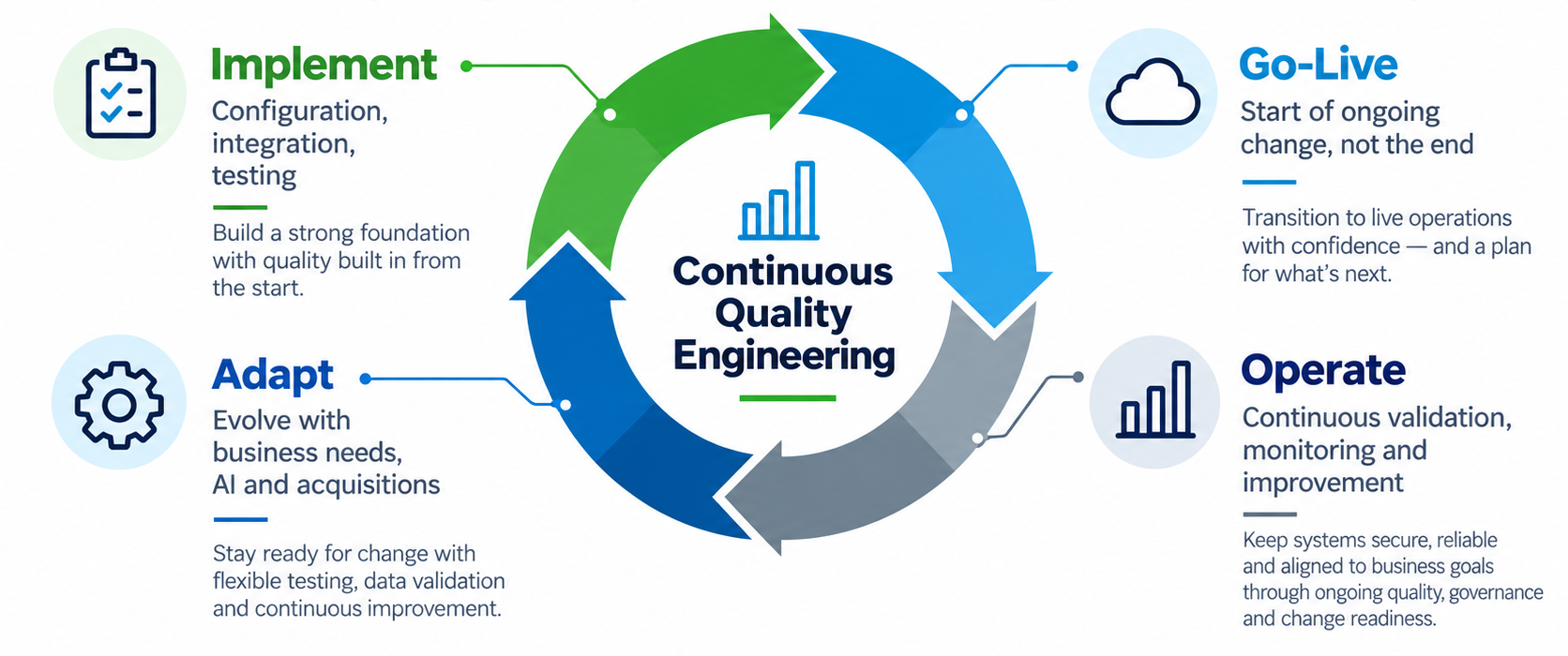
Many organizations execute successful implementations only to discover they lack the governance, automation, and quality discipline necessary to support ongoing change.
Leading CIOs are addressing this challenge by treating Quality Engineering as a long-term operational capability rather than a project-based activity.
Organizations that establish continuous validation, automated regression testing, release readiness processes, and quality governance frameworks are better positioned to adapt to change while minimizing business disruption.
Automation Is an Accelerator, Not a Strategy
Automation remains one of the most heavily discussed topics in software quality.
However, automation alone does not create quality.
Automating inefficient processes simply allows organizations to repeat mistakes faster.
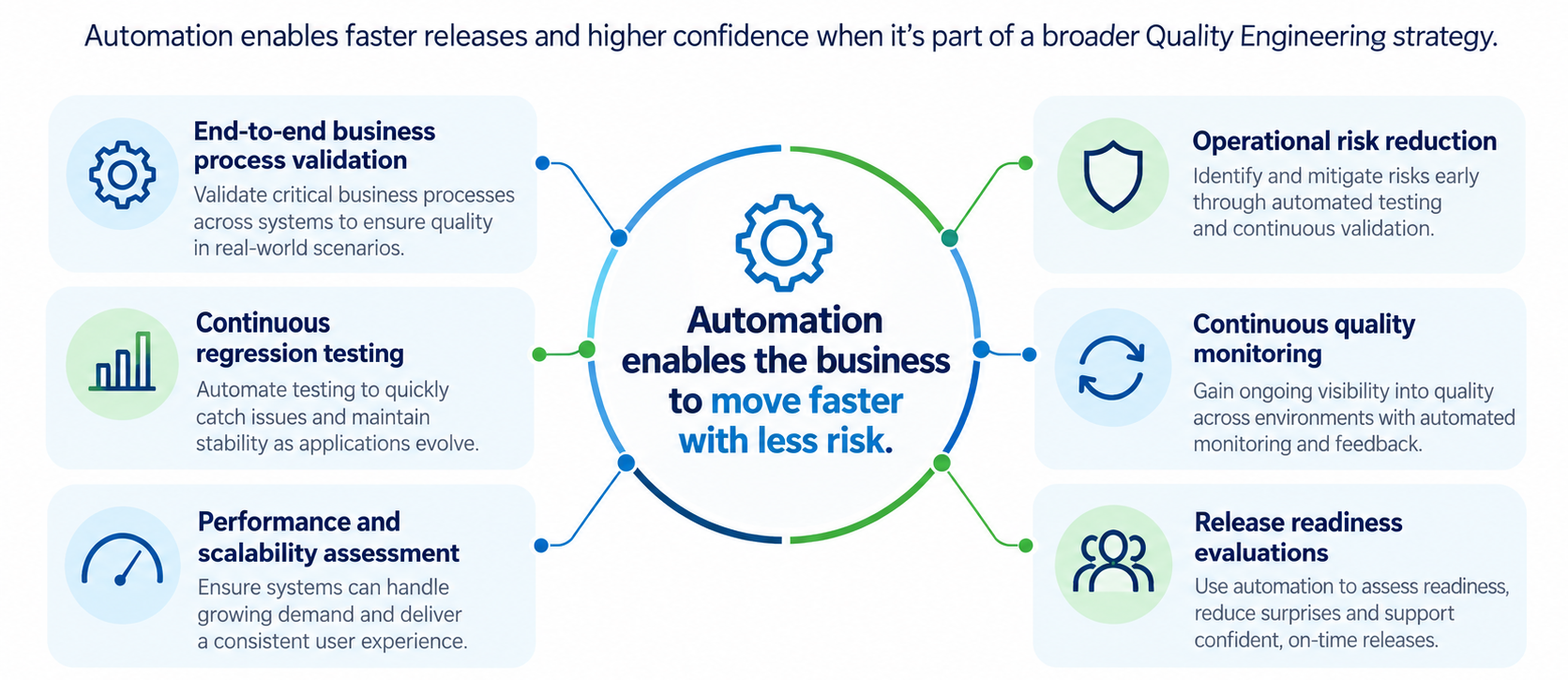
The real value of automation is not executing more tests.
The real value is enabling the business to move faster with less risk.
AI Is Transforming the Future of Quality Engineering
Artificial Intelligence is rapidly reshaping how organizations approach software quality.
Historically, significant time and effort were required to design, execute, and maintain testing programs. AI is beginning to automate and optimize many of these activities.
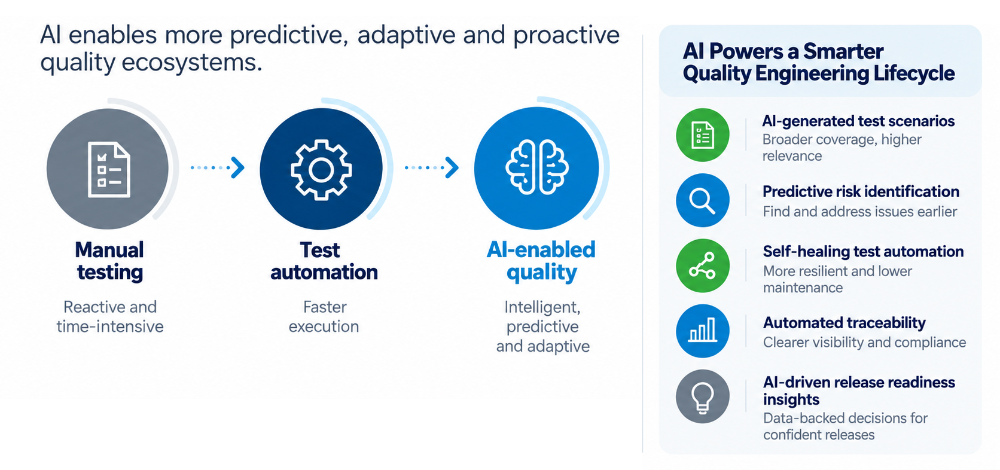
AI enables Quality Engineering to become more predictive, adaptive, and proactive.
Rather than simply reporting quality issues after they occur, future-state QE ecosystems will continuously evaluate change, identify emerging risks, and provide real-time insights that support executive decision-making.
Quality Has Become an Enterprise Risk Issue
Historically, quality metrics remained within IT organizations.
A failed deployment can disrupt order fulfillment.
A broken integration can impact financial close activities.
A performance issue can affect customer satisfaction and revenue generation.
As organizations become increasingly dependent on digital capabilities, quality becomes inseparable from enterprise risk management.
Quality Engineering as a Competitive Advantage
The organizations gaining the most value from technology investments are no longer treating quality as a checkpoint before deployment.
They are treating it as a strategic advantage.
In a world of continuous transformation, competitive differentiation increasingly depends on an organization’s ability to adopt new technologies quickly while maintaining stability, compliance, and operational excellence.
Quality Engineering enables that balance.
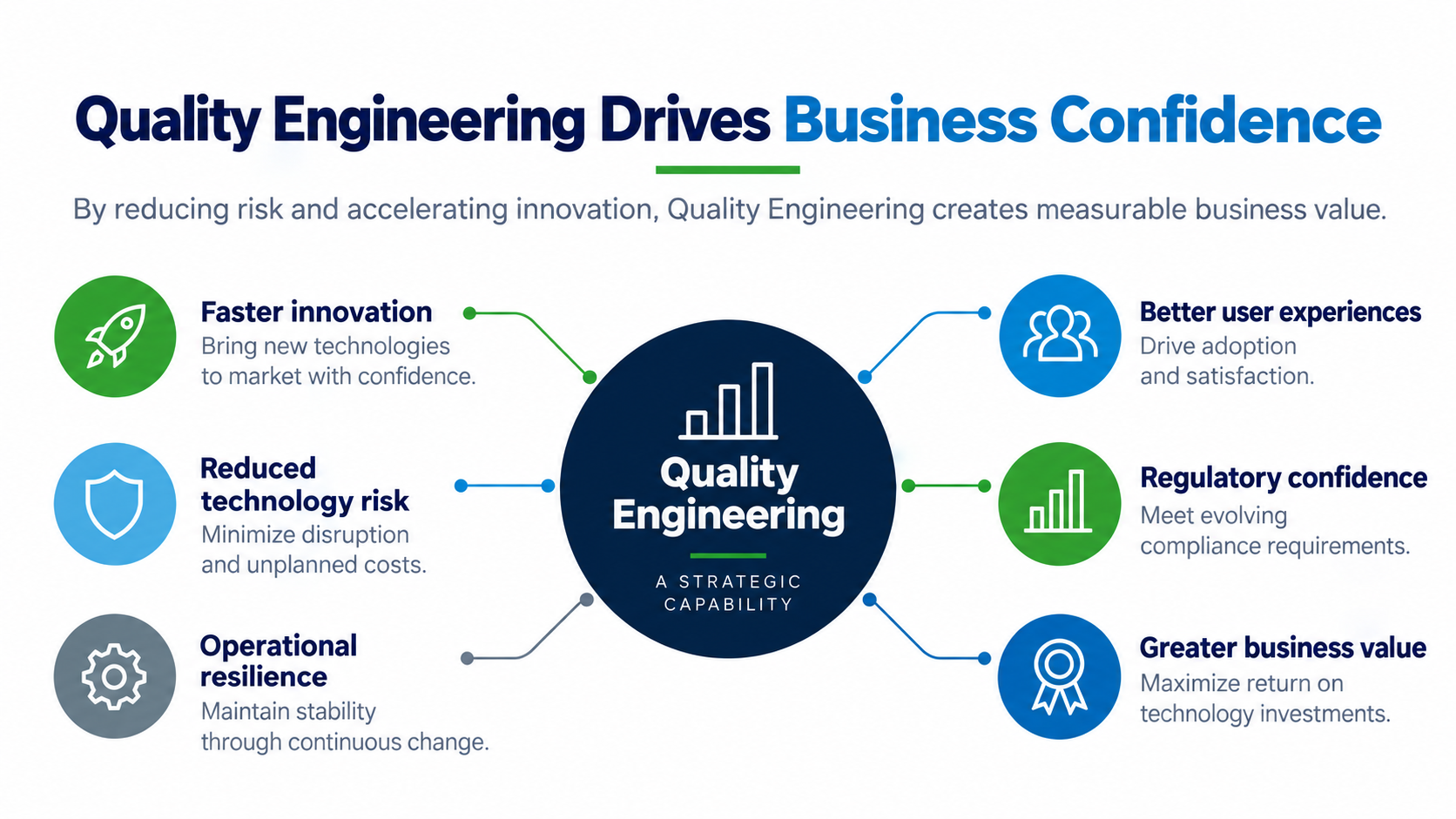
By integrating business process expertise, intelligent automation, performance engineering, AI-driven insights, governance, and continuous validation, organizations can accelerate innovation while reducing technology risk.
For CIOs, the future of quality is not about testing more.
It is about creating the confidence to transform faster, innovate responsibly, and deliver measurable business value from every technology investment.
How RSM Helps
As enterprise technology ecosystems become more interconnected and complex, organizations need a quality strategy that extends well beyond traditional testing.
RSM’s Quality Engineering team helps organizations embed quality throughout the technology lifecycle, from ERP modernization and cloud transformation initiatives to system upgrades, integrations, AI adoption, and ongoing operational change.
By combining business process validation, intelligent automation, AI-enabled quality solutions, performance engineering, release readiness assessments, and quality governance, RSM helps organizations reduce risk and increase confidence in transformation outcomes.
The question for technology leaders is no longer whether systems can be tested before release. The question is whether the organization can continuously evolve technology with confidence. Quality Engineering is the discipline that makes that possible.