


 RSMUS.com
For years, ServiceNow has been the platform that connects IT, HR, customer service, security, and operations. It acts as the glue that holds everything together.
So, when I first heard ServiceNow was adding Configure Price Quote (CPQ), I was surprised. CPQ has always been part of CRM platforms, so it seemed like ServiceNow was stepping into new territory.
But after spending time in the Early Adopter Program, I realized my first impression was wrong. ServiceNow is not just trying to make a better quoting tool. They began with workflow, which is their strength, and expanded it to include commercial operations as well.
Why CPQ makes sense for ServiceNow
Every big enterprise platform has its own focus. Salesforce handles customer relationships. SAP and Oracle manage finance and operations. Workday focuses on HR. ServiceNow has never tried to claim a single area like that. Instead, it sits between all these systems and makes sure work moves smoothly across them.
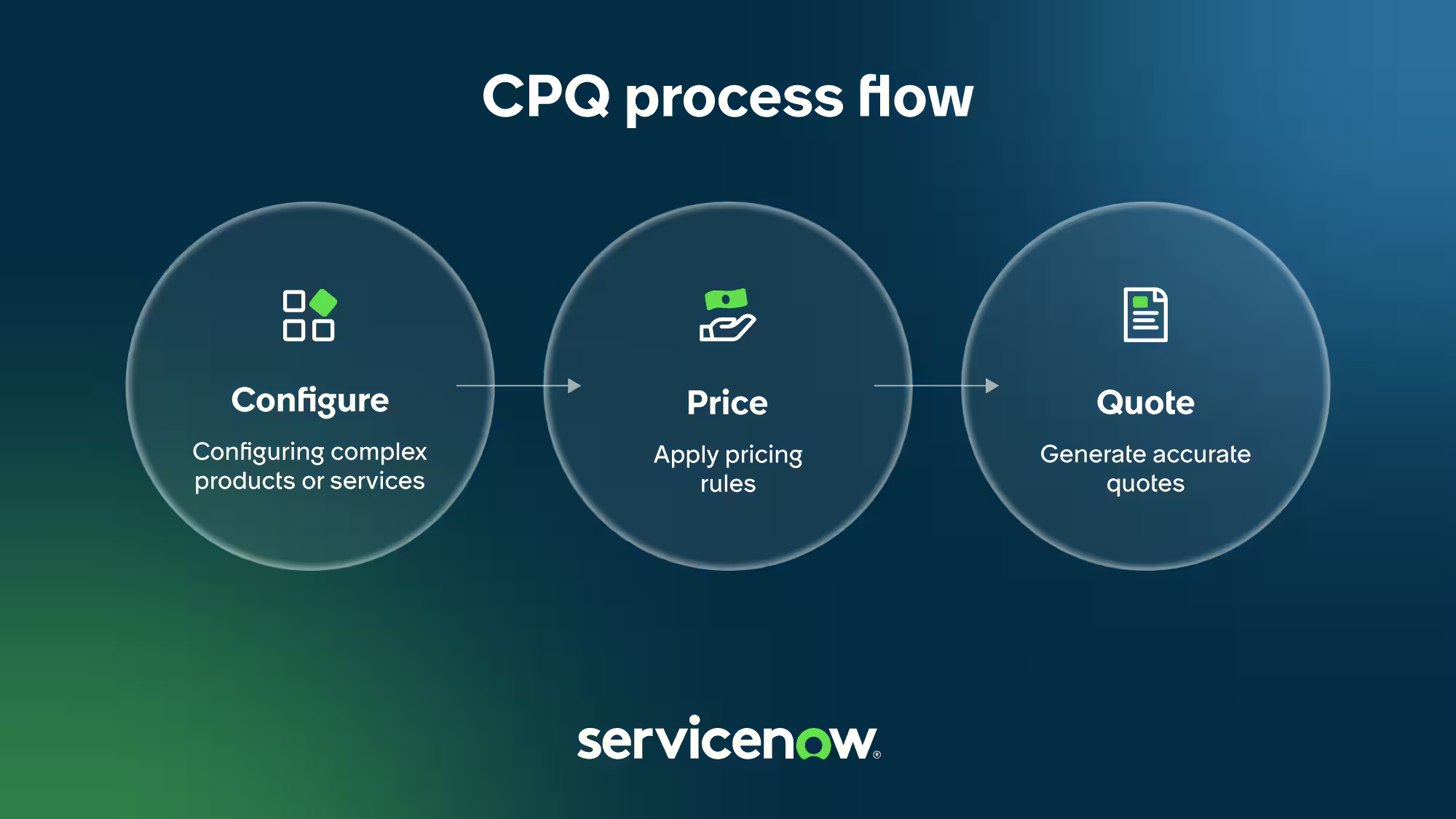
That is why CPQ makes sense here. ServiceNow is not trying to compete with dedicated CPQ vendors on features. The idea is that CPQ creates the commercial intent, such as configuration, pricing, and the approved quote.
Then Order Management takes over and turns that into real work: fulfillment, provisioning, and delivery. CRM still handles sales, and ERP still manages the money. ServiceNow stays in the middle, making sure nothing gets lost between selling and delivering.
It also makes it much clearer where this solution works best and where it still needs improvement. It is strongest for complex B2B services such as managed services, field services, tech services, and recurring bundles.
In these cases, the challenge is not writing the quote but ensuring the quote leads to real, coordinated work. It is less effective in areas that have always been handled by others, such as usage-based billing, taxes, and advanced pricing. ServiceNow is not trying to compete there. Instead, it relies on ERP and billing systems for those needs and focuses on its strengths.
The gap between sales and delivery
Most companies do not have trouble generating a quote. There are many ways to solve that part, using dedicated tools, custom solutions, or even spreadsheets. The real problems start after the quote is signed.
After the deal closes, everyone starts recreating the same information in different systems. Delivery creates a project plan, customer success prepares onboarding, and finance checks the terms. Four teams end up with four separate versions of the same deal, and none of them communicate with each other. That’s the whole problem in a sentence: the deal existed as information, and none of it moved anywhere on its own.
Order Management changed my perspective
I joined the program expecting to spend most of my time in CPQ. Instead, I kept ending up in Order Management.
Here’s what I noticed about CPQ on its own: it gives you a clean, approved quote, but it’s still just a document. It doesn’t do anything by itself. Order Management is where the quote turns into real work. Instead of giving someone a PDF and asking them to sort it out, the platform moves that information into the next step.
That’s what really changed my perspective. Seeing an approved quote turn directly into fulfillment tasks, provisioning steps, and delivery work, instead of becoming something the delivery team must read, interpret, and rebuild somewhere else, feels like a distinct way of working. The quoting screen isn’t the interesting part. What happens right after “approved” is.
Looking ahead
The technology side itself is convincing. I am less certain whether companies are truly ready for it. Many organizations have built their entire process around CRM and delivery being separate, with different tools, owners, and habits. I do not yet know whether they will restructure around a single connected platform or if CPQ will just be added to a process that never really changes. That is what I am watching for next.

Chais McCrae
Chais McRae is a Director at RSM, bringing deep expertise in accounting and consulting services with a strong focus on ServiceNow. His career reflects broad and versatile experience in ServiceNow consulting, specializing in the design, implementation, and automation of enterprise business workflows.